

Early on Wednesday, Iran launched strikes targeting Israel and neighboring Gulf countries, causing explosions to be heard in the United Arab Emirates and Qatar. Interceptions were reported in Saudi Arabia, heightening tensions in the region. The attacks occurred shortly after Iranian state media confirmed that Israeli military operations resulted in the deaths of prominent Iranian officials, including Ali Larijani, a top security official, and General Gholam Reza Soleimani, the head of the Revolutionary Guard's Basij force, known for suppressing protests.
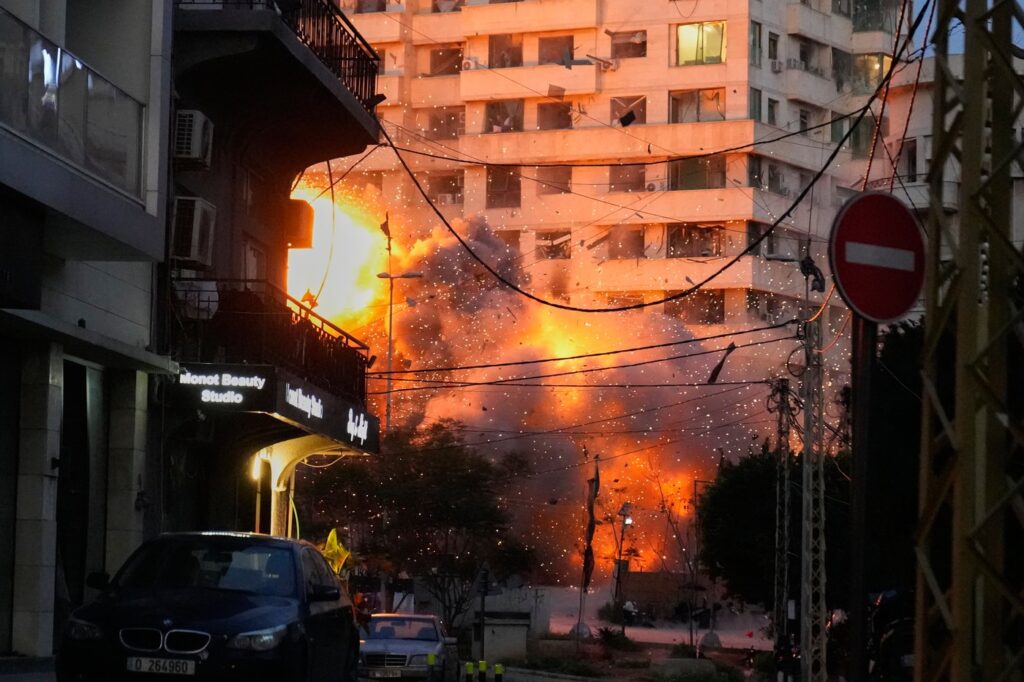
In retaliation, an Israeli airstrike hit an apartment building in Bachoura, central Beirut, completely flattening it as dawn broke. Prior strikes on residential areas in other parts of central Beirut early Wednesday resulted in at least six deaths and 24 injuries, according to the Lebanese Health Ministry. Such Israeli airstrikes in central Beirut have become increasingly frequent, often occurring with little to no warning, especially as the conflict with Hezbollah intensifies.
The ongoing conflict, described as a U.S.-Israeli war against Iran, has led to significant casualties, with reports indicating that at least 1,300 people have died in Iran, over 900 in Lebanon, and 14 in Israel. Additionally, 13 U.S. service members have been reported dead, with approximately 200 injured, according to U.S. military sources.
Amid these escalating tensions, a senior Australian government minister, Treasurer Jim Chalmers, stated that he was not aware of any formal U.S. request for military assistance to ensure the security of the Strait of Hormuz. This statement followed complaints from U.S. President Donald Trump regarding the lack of support from Australia, Japan, South Korea, and NATO to secure the strategic waterway against potential Iranian attacks. Chalmers reiterated that Australia had not been considering sending naval forces to the Strait of Hormuz.
The ripple effects of the conflict continue to be felt beyond the immediate region, with the situation in the Middle East drawing global attention as nations evaluate their responses to the mounting hostilities. Analysts suggest that the potential for further escalation remains high, as both sides have emphasized their willingness to respond to perceived threats with military action.








