

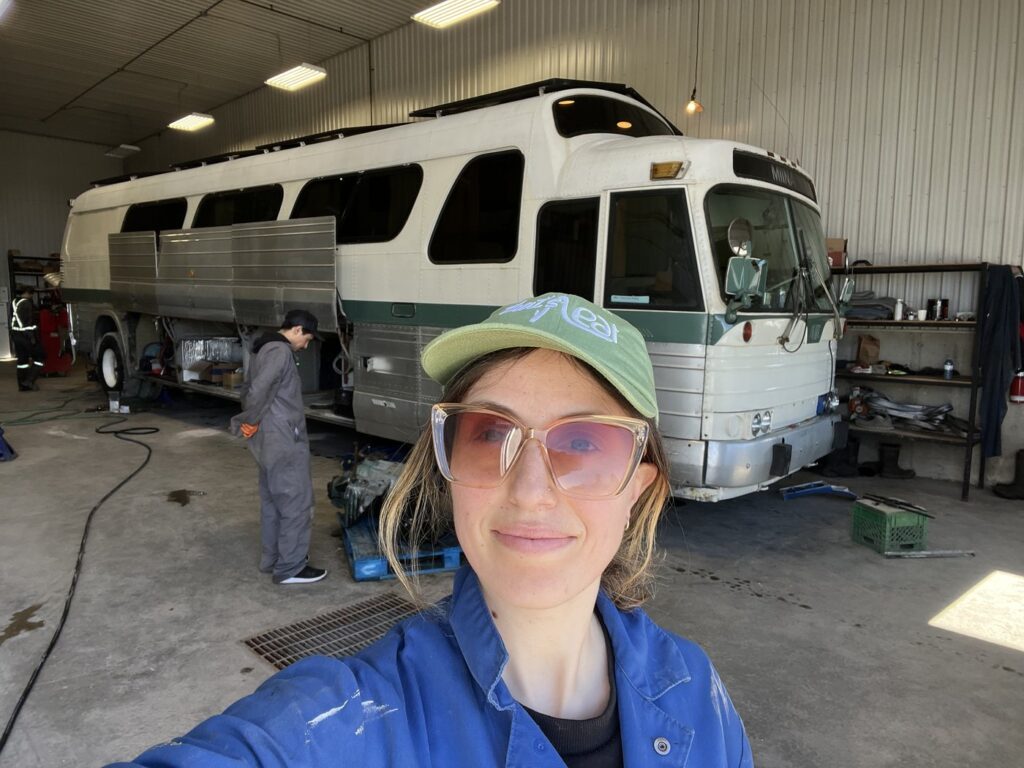
Near Cobourg, Ontario, a tour bus powered by recycled cooking oil faced a breakdown in the midst of a cross-country tour led by B.C. singer-songwriter Miina. This project aimed to demonstrate that musicians could still manage touring expenses in 2026 through ingenuity and alternative fuel sources. However, the bus, a converted 1972 Greyhound, malfunctioned while traveling to a gig, resulting in costly repairs and postponed shows.
Miina's experience highlights the challenges faced by Canadian musicians as they navigate rising costs for fuel, food, and accommodation amidst inflation. As audiences become more cautious about their spending, artists find it increasingly difficult to break even on tours, prompting many to downsize their operations or reconsider touring altogether.
Independent musicians rely heavily on ticket and merchandise sales for income, as streaming royalties are often insufficient for a living wage. According to the Canadian Live Music Association (CLMA), live show fees and merch sales can account for over 75% of an artist’s annual income, yet the current economic landscape makes profitability uncertain. Halifax folk-pop artist Jenn Grant expressed that the pressure to remain financially viable has forced her to limit her touring party and grapple with additional costs like a tour nanny while traveling with her children.
Indigenous singer-songwriter Aysanabee reported investing over $80,000 of his own money into a recent tour, even with strong ticket sales and revenue from grants and merchandise. He emphasized transportation as the biggest expense, noting how the rising costs of travel significantly impact budgets. Aysanabee also highlighted the broader economic ecosystem that artists support, which includes tech staff, venues, and production, all of whom are affected by rising prices, including gas.
The logistical difficulties of touring in Canada are compounded by its vast geography, with artists often having to cover significant distances between cities. Aysanabee pointed out that unlike in the U.S. or Europe, where distances between locations are shorter, Canadian musicians face higher costs due to longer travel times without guarantee of income through performances, stressing that touring can be an unsustainable endeavor.
Tour manager Jen Ochej noted that the rising expenses are pushing some artists to consider canceling tours altogether, affecting the live music scene significantly. To support the industry, the Ontario government announced over $20 million in funding for festivals and events, while FACTOR launched a $2-million program to assist Canadian promoters in supporting local talent, despite uncertain ticket sales.
The ongoing pressures are not just economic; they are influenced by changing audience behavior as people are becoming increasingly selective in their concert attendance, often prioritizing major acts over independent or emerging artists. Kevin Drew, frontman of Broken Social Scene, noted that attendees are more cautious with their spending and that balancing the costs of touring remains a constant challenge for artists, regardless of their standing in the industry.
Drew explained that current market conditions have made it increasingly necessary for bands to reevaluate their finances continually. His band expects losses on their upcoming North American tour, acknowledging that while they know the risks, they find purpose in performing live. Canning added that amidst global uncertainties affecting fuel prices, artists are not immune to the same financial strains affecting the wider population, drawing a parallel between their challenges and those faced by everyday consumers.
In a world where the costs of touring are escalating, the necessity for artists to connect with their audiences through live performances remains a driving force, underscoring the importance of music as a communal and healing experience.








