

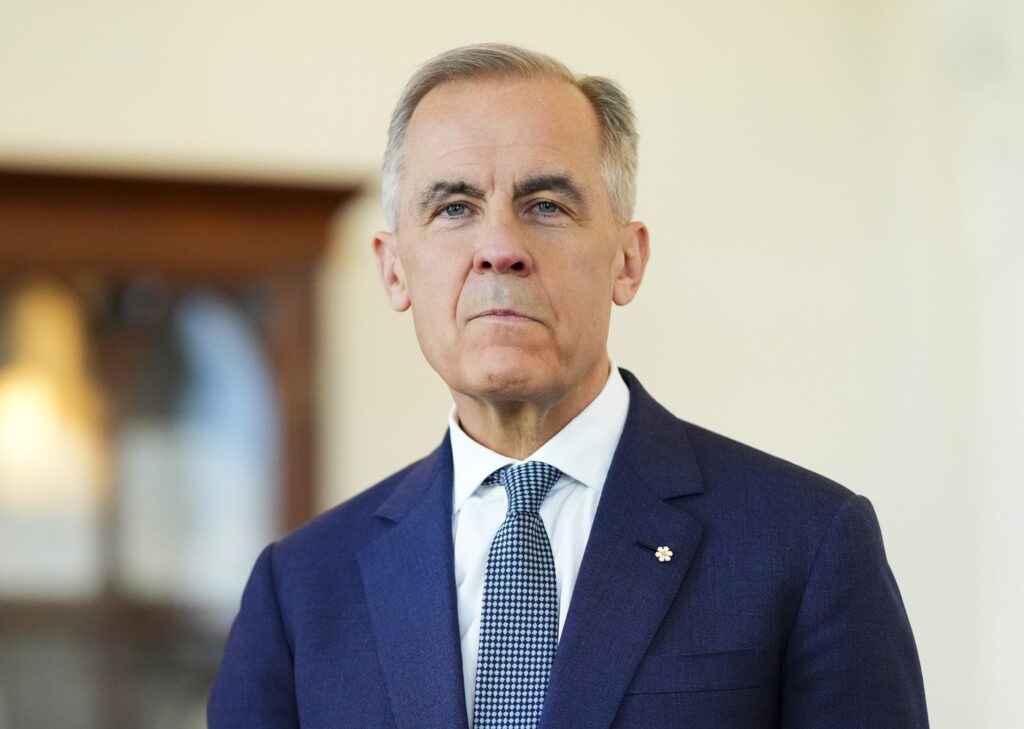
OTTAWA – Prime Minister Mark Carney is set to travel to Armenia on Saturday, with an official agenda focused on Ukraine’s defense and fostering trade and investment opportunities across Europe. His visit to the Armenian capital, Yerevan, will last until Monday and will coincide with the European Political Community summit that addresses political cooperation, security, and infrastructure development.
Jean-François Ratelle, an international studies scholar at the University of Ottawa who specializes in the Caucasus region, expressed disappointment that the visit does not appear to prioritize Canada’s historical advocacy for democracy and peace in Armenia. Ratelle commented on the shift in Canadian foreign policy, indicating that the focus now seems to skew towards national interest rather than a commitment to international norms and values that previously defined Canada’s role on the world stage.
As the first non-European nation to attend these summits, Canada seeks to participate in discussions primarily involving EU nations, Ukraine, and other regional players. Achim Hurrelmann, co-director of the Centre for European Studies at Carleton University, articulated that Carney's attendance might enable him to advance European defense procurement and collaborate with EU leaders and counterparts from Ukraine and the United Kingdom.
Despite Canada's longstanding involvement in the region, particularly in conflicts involving Armenia and Azerbaijan over Nagorno-Karabakh, the Prime Minister's press release regarding this trip notably omitted any mention of the recent historical challenges facing the Caucasus. The previous Trudeau administration had actively engaged in addressing ethnicity-related conflicts and had voiced support for Canada’s Armenian diaspora. With the Russian invasion of Ukraine in 2022, the delicate situation in Nagorno-Karabakh has escalated, culminating in a military campaign by Azerbaijan that displaced over 100,000 people in 2023. This escalation occurred as Canada established an embassy in Yerevan.
Previously, Canada had publicly condemned Azerbaijan’s actions and supported EU security missions in the region, including halting military exports to Turkey over concerns of military support for Azerbaijan. Furthermore, Ottawa had taken steps to assist what it identified as “fragile” democracies in former Soviet states, benefitting Armenia through efforts to combat disinformation. However, Ratelle observed that these initiatives have significantly declined under Carney's leadership, with limited observable activities from the embassy in Yerevan related to democratization efforts.
Ratelle further elaborated that while Armenia represents a potential beacon of hope for democracy amidst surrounding authoritarianism, Canada has historically maintained minimal trade and economic relations with the country. The political transformation in Armenia remains incomplete, as highlighted by Freedom House’s 2025 report citing systemic political influence and corruption affecting the judicial system.
The geopolitical significance of Armenia and Azerbaijan is expanding, especially as both nations share borders with Iran and are engaged in U.S. initiatives aimed at fostering peace and economic links. Such developments could offer substantial economic opportunities, provided the region maintains stability over the next decade. Nevertheless, lingering disputes related to borders, prisoners of war, and cultural heritage destruction by Azerbaijan complicate these prospects.
Many observers were left disheartened when Carney hosted the G7 summit last June without addressing issues pertinent to the Caucasus. This omission speaks volumes about the current administration's priorities, emphasizing economic trade over the enforcement of international law. Armenia’s invitation to Canada may stem from a desire to bolster relationships with middle powers amid its fragile geopolitical environment.
Carney confirmed during a recent address that he has never before visited Armenia, which marks a notable gap since Justin Trudeau’s last attendance in 2018 at the Francophonie summit. This upcoming trip is part of Canada’s broader strategy to enhance trade connections with various countries, including an anticipated visit to Turkey for the NATO summit in July. Ahead of this, Canada’s Foreign Affairs Minister Anita Anand participated in commemorative events for the Armenian genocide, a term that remains rejected by the Turkish government.








