

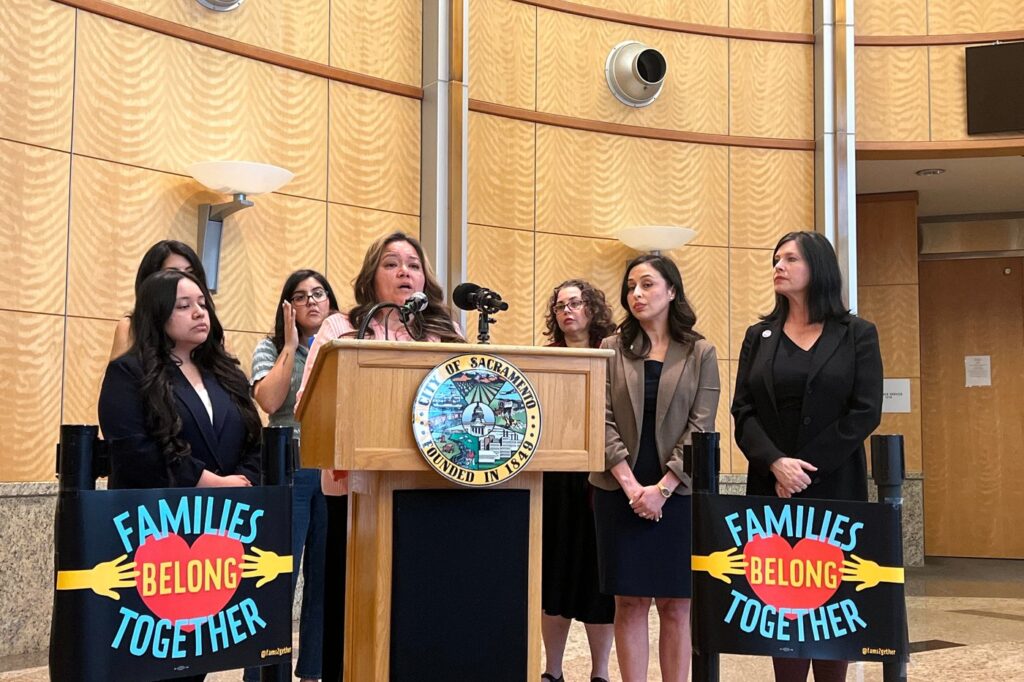
SACRAMENTO, Calif. (AP) — Maria de Jesús Estrada Juárez, a Mexican citizen who had lived in the United States for 27 years, was deported to Mexico in February 2023 during an immigration hearing. Estrada Juárez had been granted protections under the Deferred Action for Childhood Arrivals (DACA) program since 2013, which shielded individuals brought to the U.S. as children from deportation, provided they maintained a clean record.
Her deportation occurred suddenly on February 18, just one day after her arrest by U.S. Immigration and Customs Enforcement (ICE). Estrada Juárez expressed her profound pain at the news conference held in Sacramento, stating, "I didn’t get to say goodbye. It all happened so fast. This has been one of the most painful experiences of my life." Her daughter, Damaris Bello, echoed the emotional turmoil, reflecting on the experience of losing her mother seemingly overnight, “It was like grieving someone who was still alive.”
The Trump administration's aggressive immigration policies saw the deportation of several other DACA recipients during its tenure. Advocates for immigration reform have pointed to Estrada Juárez’s case as a stark example of the urgent need for more permanent protections for DACA recipients, commonly referred to as "Dreamers." Legal experts noted that Estrada Juárez’s case is one of the rare instances where a judge ordered a deported individual’s return to the U.S., an outcome which is becoming more common as focus shifts towards rapid deportation processes under the current administration.
U.S. District Judge Dena Coggins, appointed by President Joe Biden, ruled on March 23 that Estrada Juárez’s deportation was a "flagrant violation" of her DACA protections and an infringement of her due process rights, demanding the federal government facilitate her return within a week. Despite this ruling, the U.S. Department of Homeland Security defended ICE's actions by citing a 1998 removal order against Estrada Juárez, which had been imposed shortly after her arrival in the U.S. as a teenager. Although she was initially deported at that time, she returned to the U.S. weeks later and had maintained her DACA status since 2013. The reinstatement of the 1998 order came only after her February arrest.
The experiences following her deportation were particularly harrowing, with Estrada Juárez stating, "You can’t enjoy life when the most important part of your life is not there." After weeks spent with relatives in Mexico, she reunited with her daughter on Monday night. Bello, who was ecstatic about the reunion, shared her feelings about their newfound hope for healing and moving forward as a family, saying, "Having her back home means everything to me. It means we can begin to heal, to rebuild and to move forward together as a family."
This incident raises vital questions about the treatment of DACA recipients and the broader implications of rapidly changing immigration policies. It emphasizes the emotional and legal complexities surrounding deportation, especially for individuals who have established roots and lives in the U.S. under the protections of DACA. As advocacy for more durable solutions for Dreamers continues, Estrada Juárez’s story remains a poignant reminder of the human impact of immigration enforcement policies.








