

U.S. President Donald Trump announced that the military's operations in Iran could conclude in two to three weeks, with an emphasis that the responsibility for securing the Strait of Hormuz will transition to the countries dependent on it for oil and shipping. This statement came alongside the White House's scheduling of a prime-time presidential address concerning the ongoing conflict.
In recent remarks, Trump expressed dissatisfaction with allies who have not contributed sufficiently to the U.S. war efforts, bluntly advising them to "go get your own oil." His comments reflect a fluctuating stance, oscillating between claims of progress in diplomatic discussions with Iran and threatening to escalate military actions.
Regarding the Strait of Hormuz, which has been impacted by closure mandated by Iran, Trump stated that the U.S. would have no involvement in future developments in this critical waterway. The Strait is vital, with 20 percent of the world's oil supply passing through it, and Gulf nations depend on it for both imports and exports, including food supplies.
The ongoing conflict has had economic repercussions, with U.S. gas prices rising above $4 per gallon for the first time since 2022, driven by the war's influence on global fuel prices. Analysts caution that rising gas prices will likely affect grocery costs as transportation and packaging expenses increase for businesses.
In an interview with Al Jazeera, Iran's Foreign Minister Abbas Araghchi confirmed receipt of messages from U.S. Mideast envoy Steve Witkoff. However, he stressed that these correspondences do not signify actual negotiations with the U.S., as he expressed a lack of faith in any productive outcomes. The trust level between Iran and the U.S. is reportedly at zero, prompting Araghchi to assert readiness for a possible ground offensive by U.S. forces, stating, "We know very well how to defend ourselves."
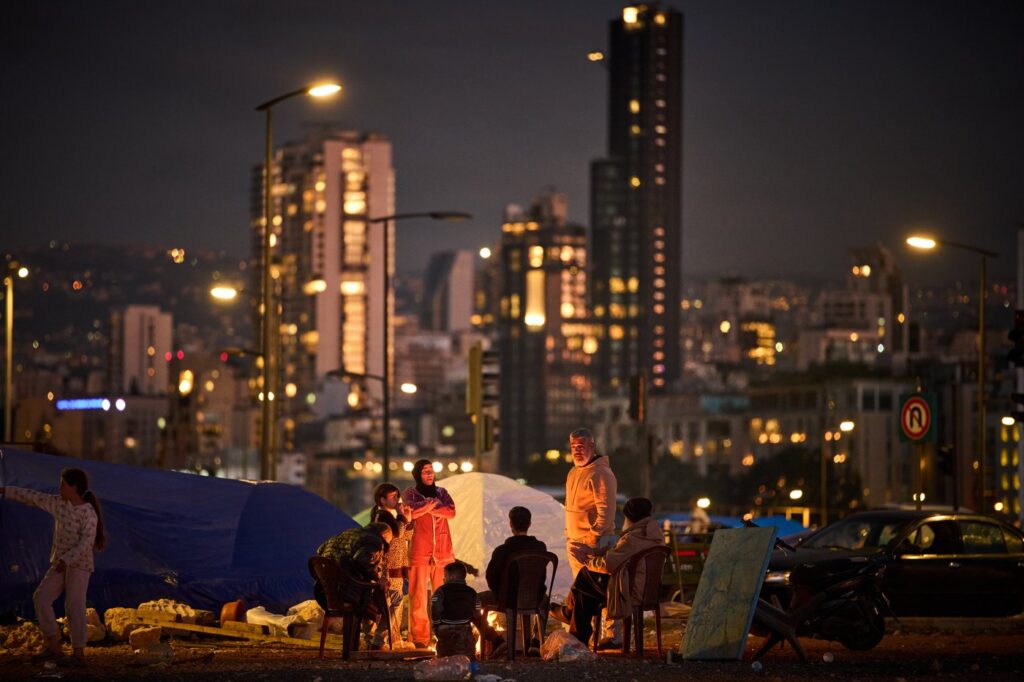
The conflict has also seen escalating violence in the region. In Beirut, a strike attributed to Israeli forces resulted in the death of at least five individuals, with 21 others reported wounded. This strike, targeting a neighborhood associated with Hezbollah, underscores the tense atmosphere in Lebanon amidst the ongoing conflict.
Moreover, Israel's military warned about an incoming missile from Yemen, launched by Houthi rebels aligned with Iran. This warning came after a significant lull in missile activity and heightened alarm levels across southern Israel. Emergency protocols were activated in response, reflecting ongoing threats from various fronts as the conflict broadens.
Additively, an Iranian drone attack ignited a fire at Kuwait International Airport, though the incident resulted in no reported injuries. The state-run KUNA news agency indicated that the strike may have involved Iranian-backed militias operating from Iraq.
Further asserting its military presence, Israel conducted a strike on a facility in Iran that allegedly supplied fentanyl, which the country claims is being used in chemical weapon production. Iran, in response, labeled the attack as a strike on legitimate pharmaceutical production, emphasizing its focus on hospital usage of the drug.
In response to the escalating conflict, three major airlines in the United Arab Emirates—Emirates, Etihad, and FlyDubai—announced a ban on Iranian travelers entering or transiting through the country. This decision aligns with the broader regional tensions as UAE authorities have undertaken measures affecting Iranian institutions within their jurisdiction, including hospitals and community centers.








