

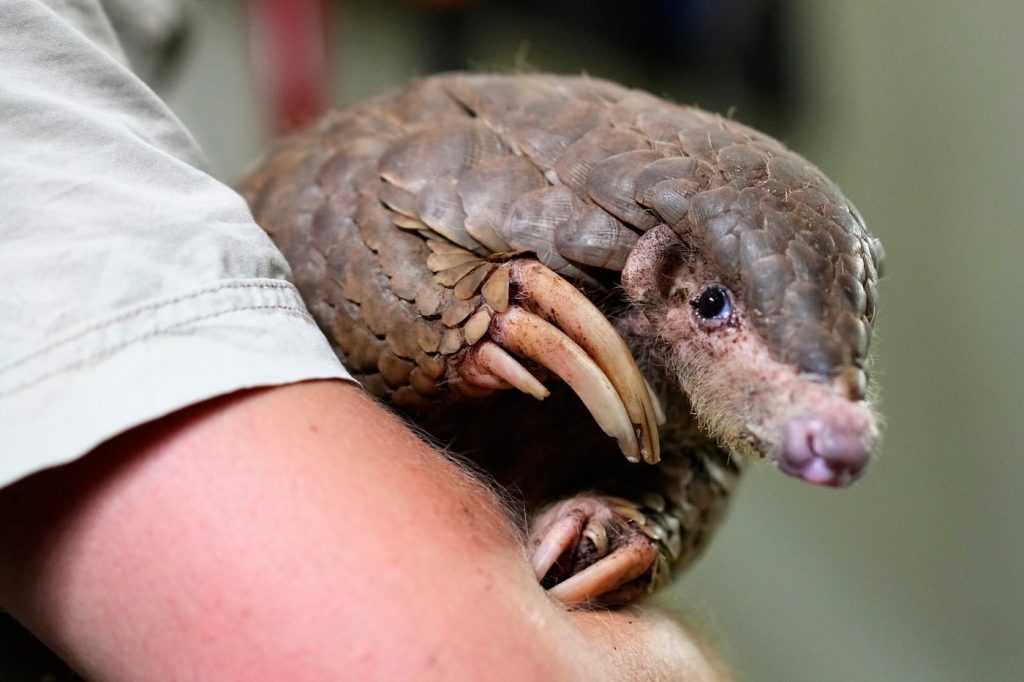
CAPE TOWN, South Africa (AP) Pangolins, the most trafficked mammals in the world, are heavily targeted due to their unique scales. Wildlife conservationists have raised awareness about the plight of these shy, scaly anteaters on World Pangolin Day. Found in various regions of Africa and Asia, pangolins face significant threats from illegal wildlife smuggling, with over half a million pangolins seized in anti-trafficking operations between 2016 and 2024, according to a report by CITES.
The World Wildlife Fund estimates that more than a million pangolins have been taken from the wild in the last decade, not including those that were not intercepted. While pangolin meat is considered a delicacy in some cultures, the primary driver of illegal trade is their scales, which are made of keratin. In parts of Asia, particularly China, these scales are believed to have medicinal properties, despite there being no scientific evidence to support these claims.
There are eight species of pangolins, with an equal split between Africa and Asia, all of which are at varying levels of risk for extinction. Unique among mammals, pangolins are entirely covered in keratin scales that overlap and possess sharp edges, providing an effective defense mechanism as they can curl into a ball to avoid predators, including lions. However, they lack defenses against human poachers and tend to resonate less with the public compared to other endangered species like elephants, rhinos, or tigers.
Although some data suggest a decrease in pangolin trafficking since the onset of the COVID-19 pandemic, the poaching rate remains alarmingly high in various African regions. Nigeria is identified as a critical hotspot for pangolin trafficking. Dr. Mark Ofua, a wildlife veterinarian, has dedicated over a decade to rescuing pangolins in Nigeria, where he operates an animal rescue center and a pangolin orphanage in Lagos. His efforts include raising awareness among the public through wildlife shows aimed at children and engaging entertainers to promote conservation campaigns on social media.
Nigeria hosts three of the four African pangolin species, yet these creatures are not widely recognized by the nation’s 240 million residents. Ofua's motivation for increasing public awareness stemmed from a humorous encounter with a group of young men who, upon seeing rescued pangolins, confused them with "baby dragons." This incident prompted him to reflect on the dire need for public knowledge regarding the species. Ofua emphasized the troubling fact that if people do not even know what a pangolin looks like, protecting them becomes an even more challenging endeavor.
As the demand for pangolin scales continues to drive illegal poaching and trafficking, the conservation efforts led by individuals like Dr. Ofua highlight the urgent need to educate and engage communities in the protection of this vulnerable species.








