

SEOUL, South Korea (AP) – Governments and companies worldwide reacted swiftly to the U.S. Supreme Court's recent ruling that invalidated several tariffs imposed during the Trump administration. This decision is a significant development in the ongoing saga of U.S. trade policy, which has seen considerable upheaval since President Donald Trump took office 13 months ago.
The ruling has unsettled trade officials across the globe, particularly in regions like South Korea and South America. In response, South Korea's Trade Ministry convened an emergency meeting to navigate the implications of this new trade landscape. Certain exports to the U.S., notably automobiles and steel, remain unaffected by the Court's decision. However, those impacted may soon face a new 10% tariff, a measure announced by Trump through an executive order just prior to the Supreme Court's ruling. Following this, Trump declared plans to increase this tariff to 15%.
In Paris, French President Emmanuel Macron praised the checks and balances present in the U.S. political system, acknowledging the importance of the rule of law. During a visit to an agriculture fair in Paris, he remarked, "It’s a good thing to have powers and counter-powers in democracies. We should welcome that." Nonetheless, he advised caution against any sense of triumph over the ruling.
Officials worldwide are meticulously reviewing existing bilateral and multilateral agreements with the U.S. as they brace for further changes in trade policy. Trump indicated that he would implement a new 10% global tariff under different guidelines. Macron emphasized the need to closely monitor the situation to understand the potential consequences and adapt as necessary.
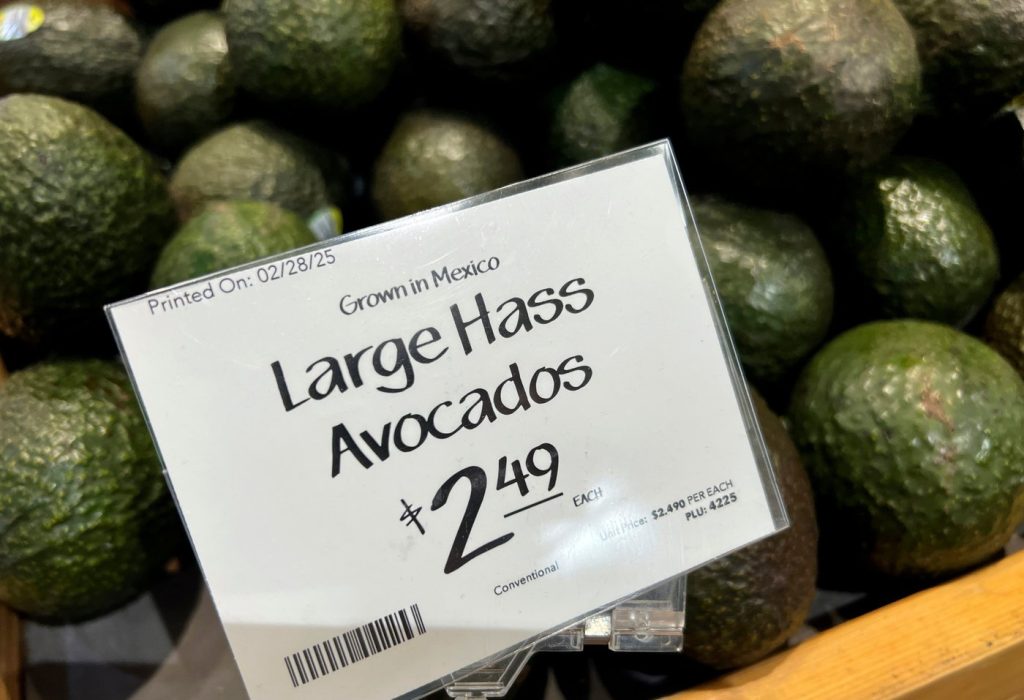
In Mexico, businesses are particularly anxious about the looming 10% tariff threat. Sergio Bermúdez, head of an industrial parks company in Ciudad Juárez, described the atmosphere as uncertain, stating that many local businesses are evaluating how these developments will impact them. Ciudad Juárez’s economy is heavily reliant on export-driven factories catering to U.S. consumers, a dynamic fostered by years of free trade between Mexico and the U.S.
Mexico’s Economy Secretary, Marcelo Ebrard, commented that the nation is observing the situation with a "cool head," noting that the majority of Mexico's exports—about 85%—currently face no tariffs due to the United States-Mexico-Canada Agreement. Ebrard is planning a trip to the U.S. next week to meet with economic officials to discuss these developments.
Alan Russell, CEO of Tecma, which assists American businesses in establishing operations in Mexico, reported an increasing workload due to the complexities introduced by new import requirements. He expressed concern that the situation characterized by the word "uncertainty" is detrimental to business operations, complicating the ability to predict rules and regulations.
Meanwhile, in the U.S., some importers who may have overpaid tariffs are seeking potential refunds, a process predicted to be complex. Bernd Lange, chairman of the European Parliament’s trade committee, declared on Deutschland radio that excess tariffs should be refunded, estimating that German companies and their U.S. importers could have overpaid by more than €100 billion (approximately $118 billion).
In Switzerland, Swissmem, a leading technology industry association, welcomed the Supreme Court’s ruling as a positive development, highlighting that Swiss exports to the U.S. dropped by 18% in the fourth quarter alone, significantly undermined by higher U.S. tariffs compared to those faced by other European nations. Swissmem President Martin Hirzel pointed out that while the ruling is promising, it does not yield immediate benefits given the ongoing uncertainties.
The implications of these trade policy shifts extend far beyond national borders, prompting diverse reactions and strategies from countries and industries trying to adapt to an evolving global trade environment. As stakeholders assess their positions and prepare for the challenges ahead, the shadow of tariff uncertainty looms large, impacting decision-making across the board.








