

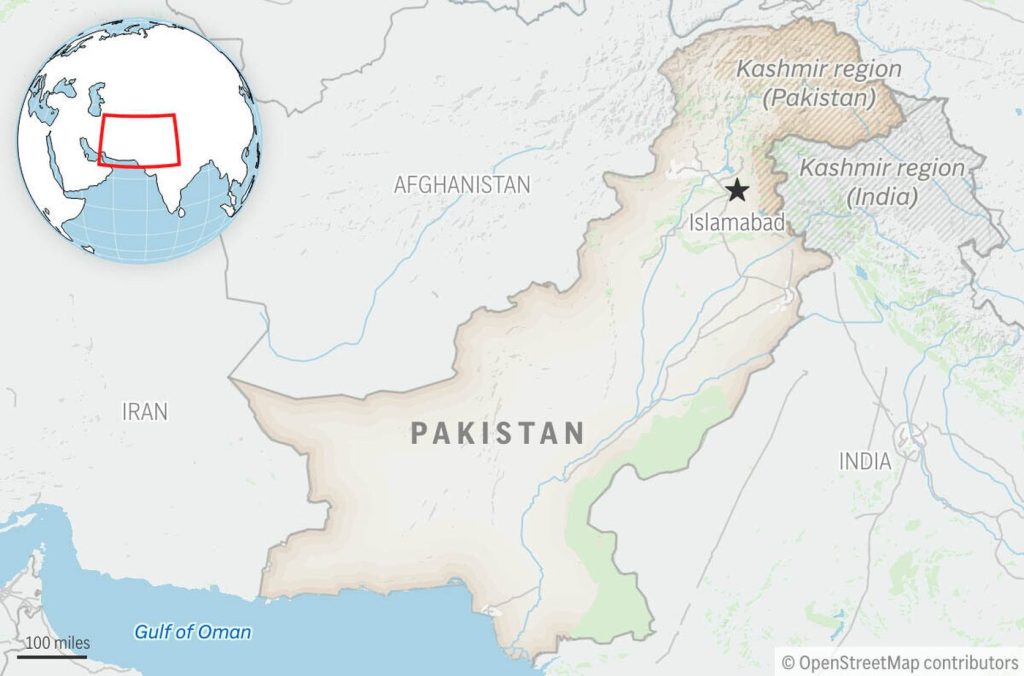
ISLAMABAD (AP) – A suicide bomber carried out an attack on a security convoy in Bannu, a district in Khyber Pakhtunkhwa province, located in northwest Pakistan along the border with Afghanistan, on Saturday. The assault resulted in the deaths of two soldiers, including a lieutenant colonel, according to statements from the Pakistani military.
The military reported that the bombing involved an explosives-laden vehicle, highlighting the ongoing conflict in the region, which has faced persistent militant threats for years. Following the incident, the Pakistani military made it clear that the country would not "exercise any restraint" in its operations against those responsible for the attack, signaling a potential escalation in tensions between Islamabad and Kabul.
While no group immediately claimed responsibility for the attack, it is suspected that the Pakistani Taliban, known as Tehrik-e-Taliban Pakistan (TTP), may be behind the violence given their history of similar attacks in the area. The Afghan government has not issued any statements regarding the incident as of yet.
This attack is particularly noteworthy as it comes just two days after Pakistan's Foreign Ministry summoned a senior Afghan diplomat to lodge a formal protest over another recent violent incident. An attack on a security post in the Bajaur district resulted in the deaths of 11 Pakistani soldiers and a young girl. Local police have indicated that the perpetrator of the Bajaur attack was an Afghan national.
In the wake of the bombing in Bannu, both Pakistani President Asif Ali Zardari and Prime Minister Shehbaz Sharif expressed their condemnation of the attack. They paid tribute to the fallen soldiers, praising Lieutenant Colonel Shehzad Gul and Sepoy Karamat Shah for their bravery and ultimate sacrifice in the line of duty.
Pakistan has experienced a notable increase in militant violence in recent years. Much of this violence is attributed to groups like the TTP and some outlawed Baloch organizations. Although the TTP operates independently, it maintains close ties with Afghanistan's Taliban, which regained control of Afghanistan in 2021. Islamabad has repeatedly accused the TTP of conducting operations from within Afghanistan, a claim that has been denied by both the TTP and the Afghan authorities.
The relationship between Pakistan and Afghanistan has grown increasingly tense since October 2023, following deadly border clashes that resulted in numerous fatalities among soldiers, civilians, and suspected militants. The violence was exacerbated by explosions in Kabul, which Afghan officials attributed to Pakistan. Despite a Qatar-mediated ceasefire that has mostly held, subsequent discussions in Istanbul failed to yield a formal agreement, leaving relations between the two nations strained.
As this situation continues to unfold, it underscores the complex interrelations between security, territorial integrity, and regional stability in South Asia. The developments not only affect Pakistan and Afghanistan but also have wider implications for regional security involving neighboring countries.








