

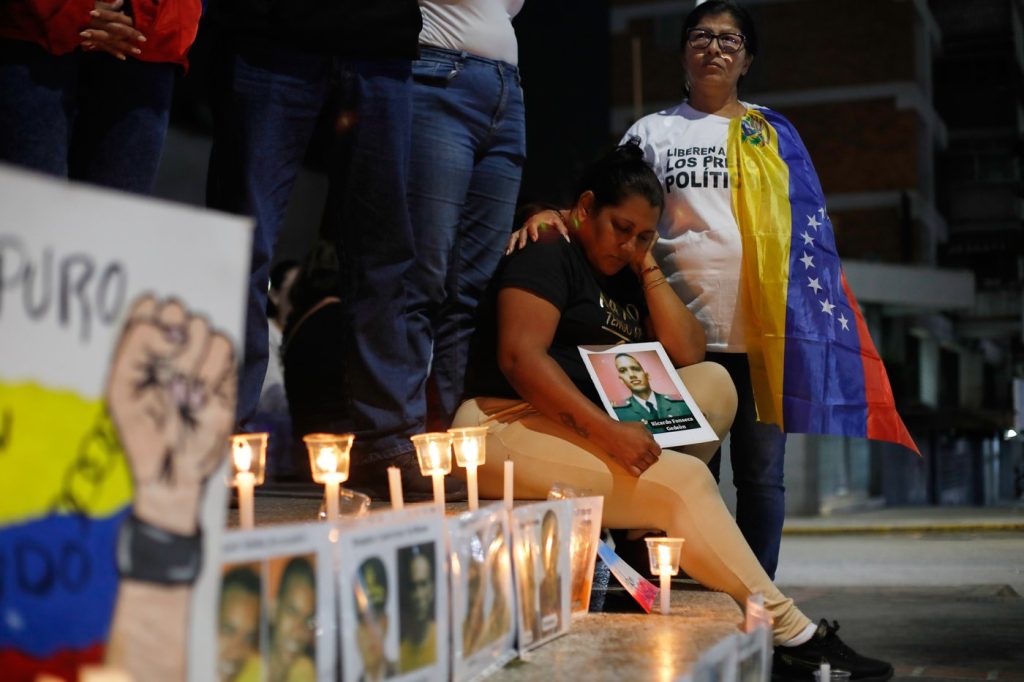
CARACAS, Venezuela (AP) — Venezuelan authorities announced that at least 379 individuals imprisoned for political reasons are set to be released this weekend following the passage of an amnesty bill signed into law earlier in the week. This amnesty is anticipated to benefit various groups, including members of the opposition, activists, human rights defenders, and journalists, many of whom have been detained for extended periods.
The approval of this measure is a notable shift for the Venezuelan government, which has historically denied the existence of political prisoners within its jails. The move comes in the wake of a dramatic U.S. military operation last month in Caracas aimed at capturing former President Nicolás Maduro.
On state television, Jorge Arreaza, president of the special commission overseeing the amnesty law, stated that the requests for amnesty had reached 379, with the release of the applicants taking place between Friday and Saturday. He also indicated that additional releases might be authorized within the next 15 days.
Reports from Gonzalo Himiob, vice president of the Venezuelan prisoners' rights organization Foro Penal, confirmed that some detainees have already been released in Barinas, a southwestern state. However, Himiob cautioned that the verification process for releases under the amnesty was still ongoing.
The newly enacted law specifically excludes individuals convicted of serious crimes, such as homicide, drug trafficking, severe human rights violations, and military rebellion. Human rights organizations have called for the provision to be applied more broadly, extending the amnesty to all political prisoners, regardless of their individual circumstances.
Alfredo Romero, president of Foro Penal, criticized the law's exclusions, arguing that it is discriminatory and unconstitutional to omit imprisoned military personnel and persecuted political figures. Romero emphasized that without addressing these omissions, true national coexistence remains unattainable.
Delcy Rodríguez, the acting president of Venezuela since January 5, remarked during the signing of the law that it represented a move away from intolerance and an opening for new political avenues in Venezuela. The intention of the bill is to grant comprehensive amnesty for crimes or offenses committed during defined periods marked by politically motivated conflicts, including acts of violence related to the 2024 presidential election.
Following the 2024 election, which led to widespread protests, over 2,000 individuals, including minors, were arrested. In the aftermath of Maduro's capture on January 3, Rodríguez's government indicated plans to release a considerable number of political prisoners. However, some relatives and human rights advocates have expressed concerns regarding the sluggish pace of releases and the strict conditions imposed on many who are freed.
The nonprofit organization Justice, Encounter and Forgiveness has documented a total of 459 political detainees being released between January 8 and February 20. This data highlights ongoing issues concerning the treatment of political prisoners within the country's judicial system, indicating a need for more comprehensive reforms to address human rights concerns.








