

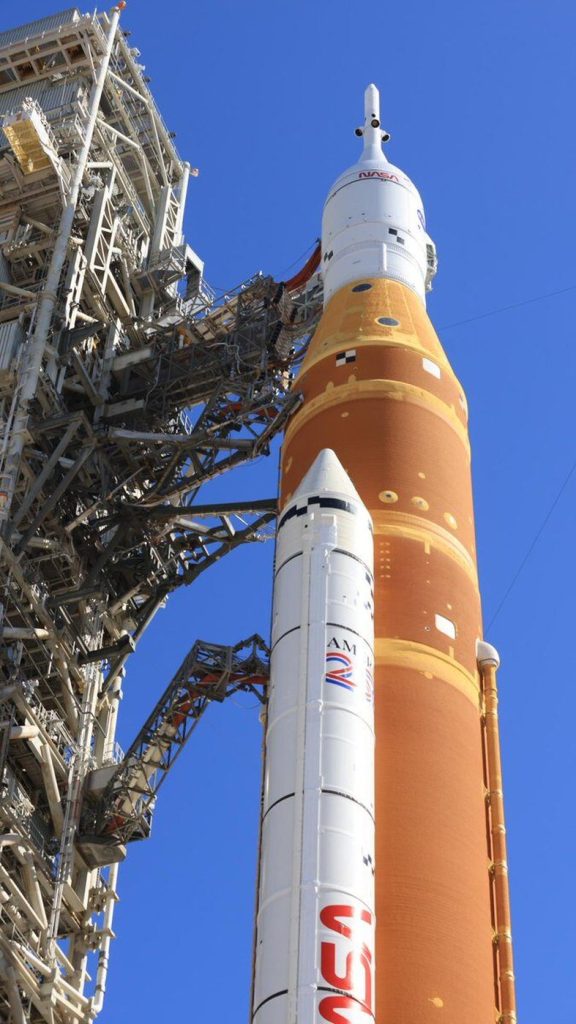
CAPE CANAVERAL, Fla. (AP) — NASA's new moon rocket has encountered another setback, jeopardizing the planned launch scheduled for March 6, which aims to mark humanity's return to the moon after more than half a century. The announcement comes just one day after NASA targeted this date for the Artemis II mission, the first crewed flight to the moon since the Apollo program.
Officials revealed that the flow of helium to the rocket's upper stage was interrupted overnight. This solid helium flow is crucial for the launch process. Importantly, this issue is separate from the hydrogen fuel leaks that previously led to a delayed countdown dress rehearsal of the Space Launch System (SLS) rocket earlier this month, necessitating a repeat test.
NASA has stated that it is currently reviewing the data concerning the helium flow issue and is preparing for two potential outcomes: returning the 322-foot (98-meter) rocket to the hangar for repairs at Florida’s Kennedy Space Center or conducting the necessary work at the launch pad. The agency acknowledged that this helium flow interruption will "almost assuredly impact the March launch window," highlighting the increasing uncertainties surrounding the mission.
The previous hydrogen fuel leaks had already postponed the Artemis II lunar fly-around by a month. However, a second fueling test conducted on Thursday showed minimal leaks, which provided NASA managers with the confidence to aim for a March liftoff. As part of the preparation, the four astronauts involved in the mission entered a mandatory two-week quarantine on Friday night, a precaution designed to minimize the risk of germ exposure before the launch.
The interrupted helium flow is specific to the SLS rocket’s interim cryogenic propulsion stage, a component critical for placing the Orion crew capsule into a proper high-altitude orbit around Earth following launch. Once in orbit, the upper stage is expected to separate from the Orion capsule and serve as a target for the astronauts inside, allowing them to practice docking maneuvers essential for future moon missions.
Historically, during NASA's Apollo program, a total of 24 astronauts successfully traveled to the moon from 1968 to 1972. In contrast, the new Artemis program has only completed one flight to date, which was a lunar-orbiting mission conducted without a crew in 2022. This inaugural test flight also faced challenges due to hydrogen fuel leaks before successfully launching into space. According to current projections, the first crewed moon landing under the Artemis program is still several years away, indicating that the road ahead remains complex and fraught with technical challenges.
The challenges faced by NASA's Artemis program highlight the inherent difficulties in space exploration. With ongoing technical issues disrupting the launch timeline, the agency must navigate these hurdles while preparing for critical future missions.








