

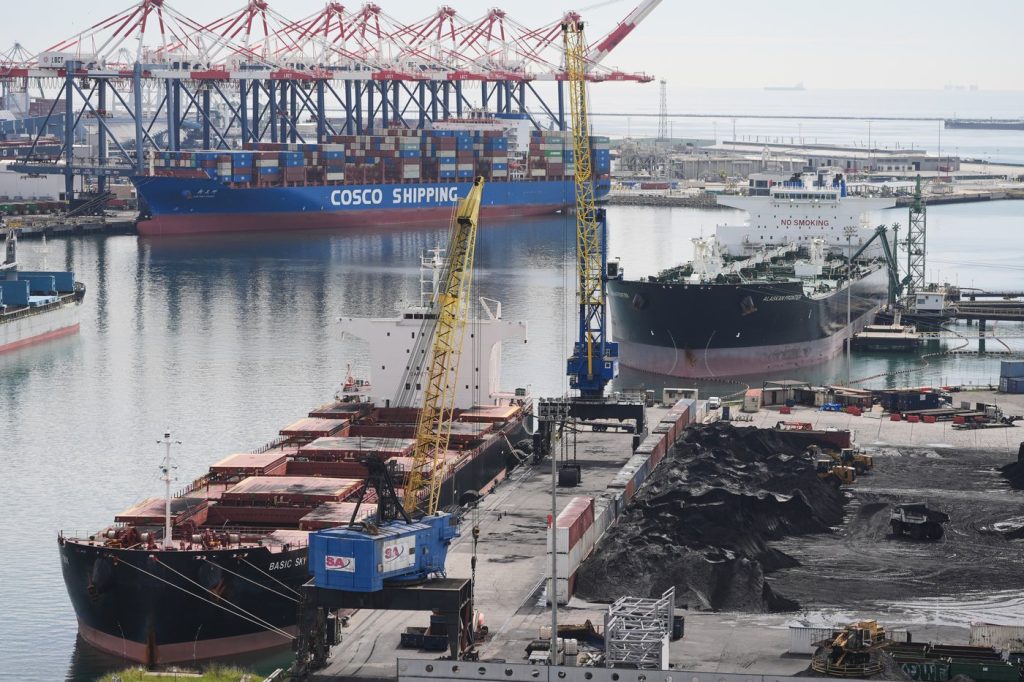
On Friday, the Supreme Court of the United States made a monumental ruling by striking down President Donald Trump's largest tariffs, which amounted to approximately $133 billion. This decision left lingering questions regarding the fate of the import taxes that the government had already collected, now deemed unlawful. Many companies are eagerly seeking refunds, but the path forward is expected to be complex and chaotic.
Many trade lawyers anticipate that, while importers will eventually receive refunds, the process will be lengthy and fraught with complications. According to Joyce Adetutu, a partner at Vinson & Elkins law firm, “It’s going to be a bumpy ride for awhile.” The refund process is expected to involve several entities, including U.S. Customs and Border Protection, the specialized Court of International Trade in New York, and other lower courts. Adetutu emphasized the substantial nature of the refunds and the challenges that both the courts and importers will face.
The Supreme Court's ruling, which concluded with a 6-3 opinion, stated that Trump's use of the 1977 International Emergency Economic Powers Act (IEEPA) to impose double-digit tariffs on virtually every country was unconstitutional. The court determined that this tax power rests solely with Congress. Two of the three justices appointed by Trump joined the majority in this decision, marking a significant legal defeat for the former president.
As of mid-December, the U.S. customs agency had already collected $133 billion in tariffs under the IEEPA. However, consumers hoping for refunds on the inflated prices they paid due to these tariffs are unlikely to see any compensation; such refunds are expected to be directed primarily towards the companies that incurred the costs.
Justice Brett Kavanaugh, in his dissenting opinion, criticized the majority for avoiding the refund issue, stating, “The Court says nothing today about whether, and if so how, the Government should go about returning the billions of dollars that it has collected from importers.” He warned that the process for issuing refunds is likely to be a "mess," echoing concerns voiced during the court's previous hearings.
During a press conference held on the day of the ruling, Trump expressed his disappointment, stating, “I guess it has to get litigated for the next two years.” He voiced frustration with the justices who ruled against his tariffs, asserting that the legal disputes surrounding these refunds might span several years.
The cancellation of the IEEPA tariffs could potentially relieve some inflationary pressure on the economy. However, the anticipated economic benefits from potential tax refunds may be limited. Many countries still face significant tariffs in specific sectors, and Trump has indicated intentions to impose new tariffs using alternative methods. Experts estimate that any refunds due to importers will take between 12 to 18 months to process.
Currently, the customs agency has protocols for refunding duties if an error is demonstrated. Lawyers believe the agency may utilize this existing framework to handle refunds related to the now-invalid tariffs. However, the scale of this situation—thousands of importers and tens of billions of dollars—presents unique challenges that have not been encountered before.
Trade lawyer Alexis Early asserted, “Just because the process is difficult to administer doesn’t mean the government has the right to hold onto fees that were collected unlawfully.” With many companies, including Costco and Revlon, already having filed lawsuits for refunds prior to the Supreme Court decision, it is evident that there will be extensive legal battles ahead. Manufacturers may also choose to sue suppliers for higher costs associated with raw materials impacted by the tariffs.
Importantly, consumers are unlikely to receive substantial refunds, as tracing price increases directly back to specific tariffs is complex. Although some might consider pursuing legal action for refunds, experts suggest that such efforts may be financially imprudent. Nevertheless, Illinois Governor JB Pritzker has called for a refund on behalf of the state's 5.11 million households, arguing that the tariffs have cost each household approximately $1,700. Meanwhile, Nevada Treasurer Zach Conine has sought $2.1 billion in recoupment for his state, emphasizing the responsibility to recover funds taken from Nevada families.








