

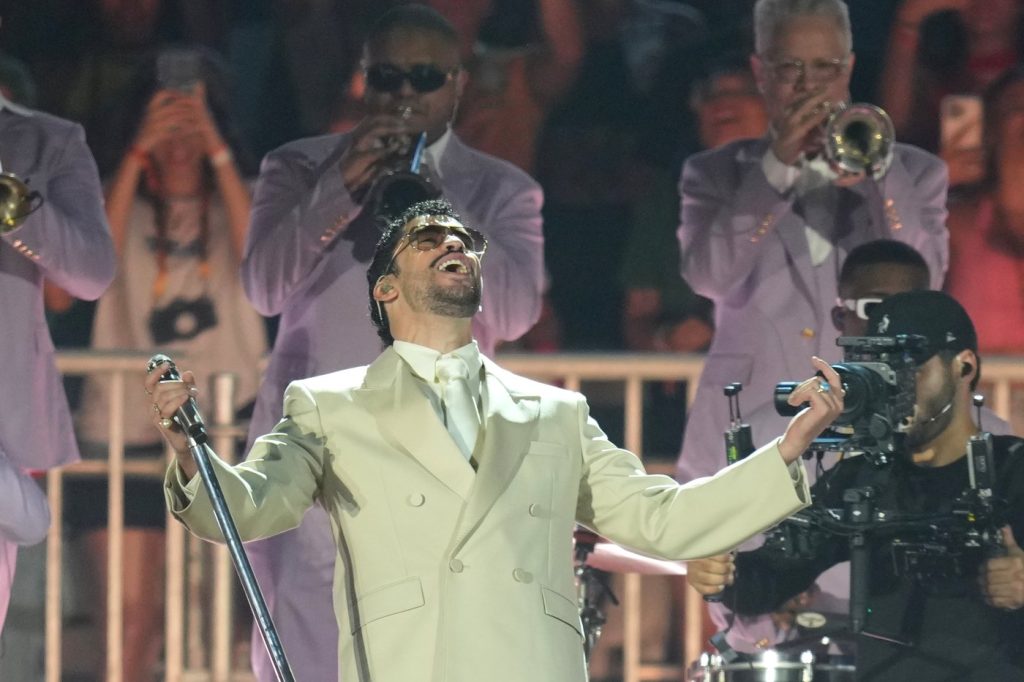
SAO PAULO (AP) — Bad Bunny, the Puerto Rican superstar known for his chart-topping hits, faces unique challenges in winning over Brazilian audiences. While he has dominated global music charts, his appeal in Brazil has not been as pronounced due to the country’s strong preference for national artists. The difficulty in breaking through is illustrated by a 2025 report from Luminate, which states that 75% of music streaming consumption in Brazil is dedicated to domestic artists. Brazil is famed for its diverse musical genres, including samba, bossa nova, and sertanejo, making it hard for foreign artists to find a foothold.
Despite these challenges, Bad Bunny’s recent Grammy-winning album, “Debí Tirar Más Fotos,” signals a potential turning point. Scheduled to perform his first-ever concerts in Brazil on February 20 and 21, 2026, in Sao Paulo, the excitement surrounding these gigs is palpable. Felipe Maia, an ethnomusicologist pursuing a doctoral degree at Paris Nanterre University, remarked, “It’s the best time to try and unlock a country like Brazil, at a time when he’s managed to dominate practically the entire world.”
In the run-up to these performances, Bad Bunny’s popularity in Brazil surged, especially after his much-publicized appearance at the Super Bowl halftime show. Following that event, his average Spotify streams in Brazil increased by an astonishing 426%. Many of his songs, particularly “Yo Perreo Sola,” saw massive streaming spikes, indicating a strong shift in listener engagement. Initially, only one show was planned at the Allianz Parque arena, but due to overwhelming demand, an additional show was added, both of which sold out quickly.
On the day of the concert, long lines formed outside the venue, filled with Brazilian fans as well as attendees from El Salvador, Colombia, and Venezuela. Many fans donned straw hats, a nod to Bad Bunny’s heritage and his recent album’s themes. Tickets were priced between $50 and $210 on Ticketmaster, but resellers listed them for over $830, reflecting the high demand.
In the context of Brazil’s vibrant Carnival celebrations, Bad Bunny-themed costumes became prevalent at street parties, highlighting his ascending status among Brazilian fans. Nicole Froio, a Colombian Brazilian writer, expressed how Bad Bunny symbolizes Latino resistance and authenticity, fostering a sense of Latino identity that can be hard to pinpoint in Brazil’s diverse cultural landscape. She noted, “There’s a lot of prejudice around Hispanic music... people don’t understand him.”
DJ Flávia Durante added that while some Brazilians traditionally view Spanish-language music as cheesy, Bad Bunny has challenged these perceptions with his latest work, breaking into mainstream Brazilian music scenes. Now, even at rock or pure pop parties, Bad Bunny’s tracks are popular requests, marking a significant shift in acceptance.
Overall, Bad Bunny’s impact on Brazilian music culture is undeniable, as he navigates complex layers of identity and cultural perceptions. His focus on Spanish-language music in a predominantly Portuguese-speaking market makes his rise to fame both impressive and significant for the Latino community in Brazil. Fans eagerly anticipate his live performance, underscoring a collective embrace of cultural diversity and unity in music.








