

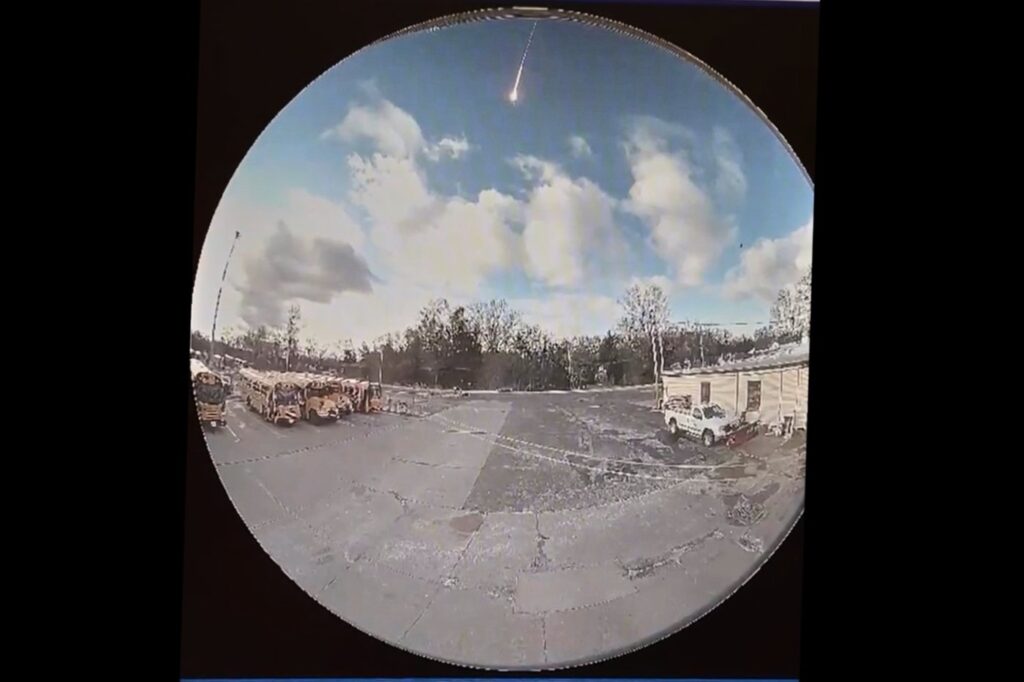
The Earth is constantly bombarded by space rocks known as meteoroids, which can create spectacular fireballs as they enter the atmosphere. These fireballs are often visible across vast distances, such as a recent fireball that was spotted near Cleveland this week. This particular meteoroid, estimated to be nearly 6 feet (1.8 meters) in diameter and weighing around 7 tons, traveled over 34 miles (55 kilometers) through the upper atmosphere before it broke apart. Witnesses from as far away as Wisconsin to Maryland reported seeing the event, yet no fragments have been discovered to date.
While dramatic, incidents like these are quite common in the grand scheme of things. To understand the nature of these space rocks, it is essential to distinguish between different terms in the realm of astronomy. An asteroid is a larger piece of rock, ice, or metal leftover from the solar system's formation approximately 4.6 billion years ago, while a meteoroid can be a smaller fragment derived from asteroids or comets. As meteoroids enter the Earth's atmosphere and emit light due to friction, they become meteors; particularly bright instances are referred to as fireballs. If any remnants manage to reach the ground, they are termed meteorites.
Meteors are not infrequent occurrences. During meteor showers, such as the renowned Perseids meteor shower that takes place every mid-August, observers can see meteors as often as every few minutes, weather conditions allowing. According to data from the American Meteor Society, there are "several thousand" meteors that qualify as fireballs entering Earth's atmosphere daily. However, many of these are not witnessed by humans since they often occur over uninhabited oceans or in conditions where they are obscured by daylight.
Despite the numerous daily occurrences, fireballs do draw public attention. In 2026 alone, reports suggest that 10 fireballs generated over 100 separate observations, averaging nearly one notable event each week. The American Meteor Society and the International Meteor Organization encourage members of the public to report sightings, enabling further investigations into these celestial phenomena.
It is also notable that many meteoroids disintegrate before reaching the Earth’s surface. They travel at astonishing speeds, typically varying from 25,000 mph (40,233 kph) to as much as 160,000 mph (257,495 kph). Upon entering the atmosphere, they abruptly encounter atmospheric gases, which create immense stress on the meteoroid as it compresses the air in front of it. This compression generates enough heat to melt and break up the meteoroid, resulting in the brilliant light displays commonly witnessed.
The ongoing interaction between Earth and meteoroids highlights the dynamic nature of our planet's environment, showcasing the balance between beauty and the potential hazards posed by these celestial bodies.








