

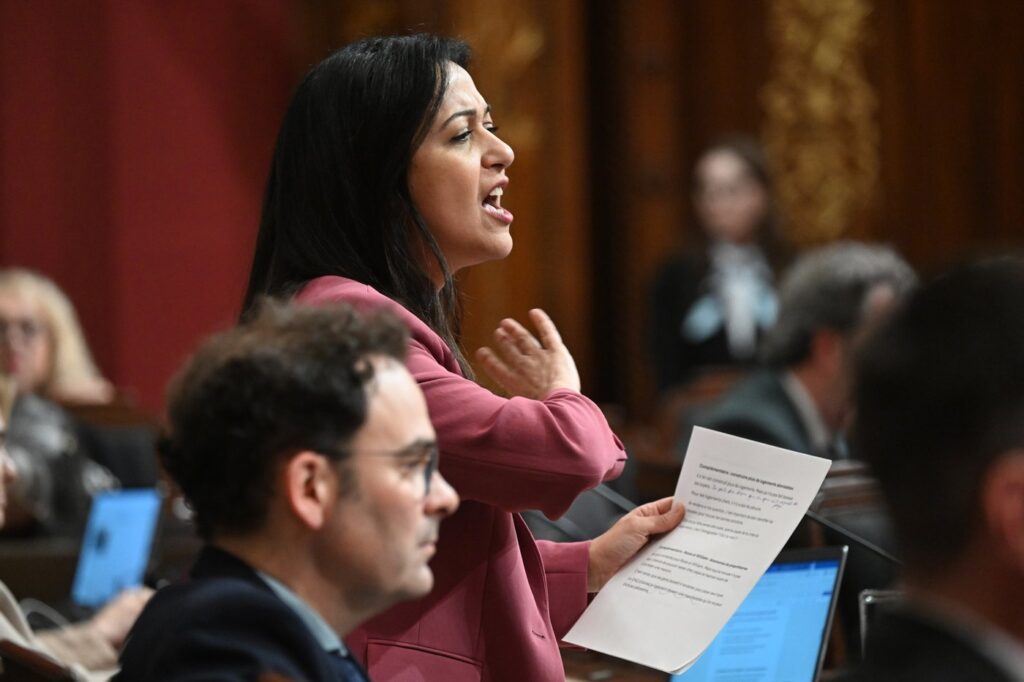
MONTREAL – Québec solidaire, Quebec's leftist sovereigntist party, has announced plans to campaign on the initiative of running public grocery stores ahead of the upcoming general election scheduled for October. The party currently holds 11 of the 125 seats in the National Assembly and has identified affordability, particularly regarding food prices and housing, as a central theme of their campaign.
Co-spokesperson and legislative leader Ruba Ghazal addressed the pressing concerns of Quebec families, stating, “We saw survey results this week; the majority of Quebec families' main concerns are the cost of rent and groceries. We want to tackle the affordability crisis and give most Quebecers some breathing room.”
At a gathering in Montreal, approximately 350 party members convened this weekend to discuss positions related to the cost of living and wealth redistribution. During the meeting, they adopted a motion to initiate a pilot project that would create public non-profit grocery stores, should Québec solidaire form the government. The initiative proposes that the government would purchase food in bulk, prioritize local products, and sell at lower prices compared to major chain stores.
Québec solidaire's economy critic, Alejandra Zaga Mendez, pointed out the concentration of food sales, stating, “Eighty percent of the distribution of food sales are in the hands of only five main grocers. We have to have more competition in order to reduce prices.” Ghazal emphasized that major grocery chains in Canada have reported significant profits while many Quebecers struggle to afford food. The introduction of publicly run grocery stores could potentially lower grocery prices by up to 30 percent, according to the party's estimates.
The projected cost for launching the pilot project is estimated at $100 million initially, with an ongoing operational cost of $85 million annually. Québec solidaire plans to finance most of these expenses by increasing taxes on the ultrarich, with specific proposals set to be debated at the congress. The party has suggested implementing an annual capital tax of one percent on individuals with assets valued at $25 million or more, increasing to two percent for those with assets exceeding $100 million. The party estimates that such tax measures could generate around $5 billion in government revenue.
Québec solidaire is drawing inspiration from New York City's democratic socialist mayor, Zohran Mamdani, who campaigned on similar promises, including establishing city-run grocery stores. Mamdani announced plans for the first store to open next year, with a goal of having one store in each of New York City's five boroughs by the end of his four-year term. Additionally, Avi Lewis, the new leader of the federal New Democratic Party, has also proposed a public grocery initiative. Earlier this year, the city of Toronto adopted a motion to open four municipally operated grocery stores as part of a pilot project.
During the weekend session, Québec solidaire members also engaged in discussions regarding the party's housing plan, which includes proposals for a cap on rent increases, in addition to setting policy priorities concerning health, education, and the environment.
This dynamic strategy reflects Québec solidaire's commitment to addressing the affordability crisis and reshaping the economic landscape in Quebec.








