

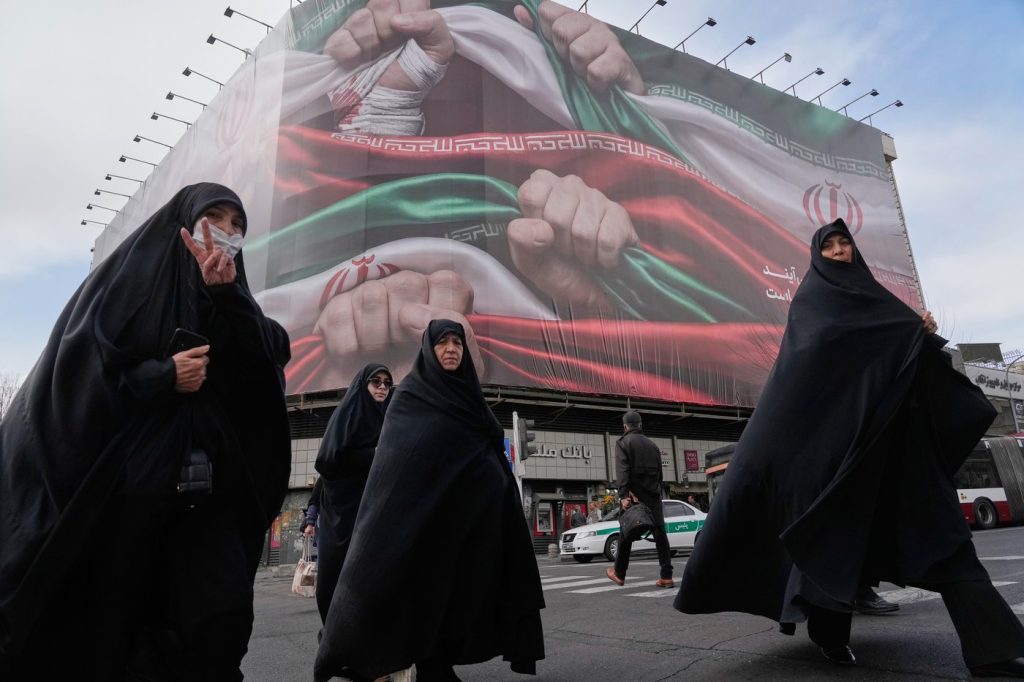
DUBAI, United Arab Emirates (AP) – Recent nationwide protests in Iran have escalated into a violent crackdown, resulting in casualty figures surpassing those of decades of previous demonstrations. This surge of unrest challenges the country’s theocratic regime and echoes the tumultuous days surrounding the 1979 Islamic Revolution, causing the current leadership to confront a populace increasingly unafraid to defy a government historically known for employing violence to suppress dissent.
The protests ignited on December 28, 2022, originally sparked by discontent among traders over the plummeting value of the Iranian rial, which had fallen to 1.4 million to $1, compared to approximately 70 to $1 during the 1979 revolution. As protests expanded, they drew in millions of demonstrators across the nation, reminiscent of the protests against then-Shah Mohammad Reza Pahlavi, which ultimately led to his exile amidst ongoing civic unrest.
After the 1979 revolution, Ayatollah Ruhollah Khomeini returned from exile in France and consolidated power under his philosophy of “Velayat-e Faqih,” or the “Guardianship of the Jurist.” This era was marked by severe reprisals against dissent, including the execution of thousands of officials and activists and the Iran-Iraq War. The regime also imposed strict societal controls, notably mandating the hijab for women, leading to decades of heightened tensions with the United States following events like the 1979 U.S. Embassy seizure.
In contemporary Iran, state television has begun airing archival footage from the early 1980s to remind the populace of the potential chaos that can arise from dissent. Officials have branded arrested demonstrators as “mohareb” or “enemies of God,” a term associated with a penalty of death, previously used during the mass executions of 1988 that resulted in at least 5,000 deaths. Pro-government supporters have echoed calls like “Marg bar monafegh!” or “Death to the Hypocrites!”—another term originated in the 1980s aimed at the opposition group Mujahedeen-e-Khalq (MEK).
The government’s reaction reflects its acute awareness of the situation’s gravity. While initially showing a willingness to negotiate by implementing changes to the corrupted subsidy system and providing financial assistance to households, the regime quickly reverted to familiar tactics of violence in response to the growing mass protests. Relying on internet blackouts and live ammunition, security forces intensified their crackdown, as evidenced by online reports and videos shared by activists.
One critical factor distinguishing these demonstrations from previous unrest—such as the Mahsa Amini protests in 2022 or the 2009 “Green Movement”—may be their economic focus, cutting through political and ethnic divisions among Iran’s 85 million citizens. Increased frustration among hard-liners over military engagements, particularly the recent 12-day confrontation that targeted nuclear sites and military leaders, may have also contributed to the urgency and scale of the current uprisings.
Moreover, unlike the past demonstrations where significant gatherings were permitted, Iran’s current leadership refuses to acknowledge the protests’ magnitude. However, a state-organized pro-government rally attracted tens of thousands, suggesting a strategic effort to diminish the track of opposition movements. As rhetoric against anti-government protesters intensified, they have been branded as “terrorists,” and authorities laid blame on foreign adversaries such as Israel and the United States for instigating the unrest.
Significant contrasts exist between the socio-political climate of today and that of the late 1970s. U.S. President Donald Trump’s administration has indicated potential military intervention, while Western nations maintain sanctions against Iran over its nuclear pursuits, further complicating the landscape. Still, the echoes of 1979 caution that Iran’s ongoing sociopolitical challenges may provide fertile ground for worsening tensions, even if the present regime believes it has successfully repressed the protests before they reach a crisis point.








