

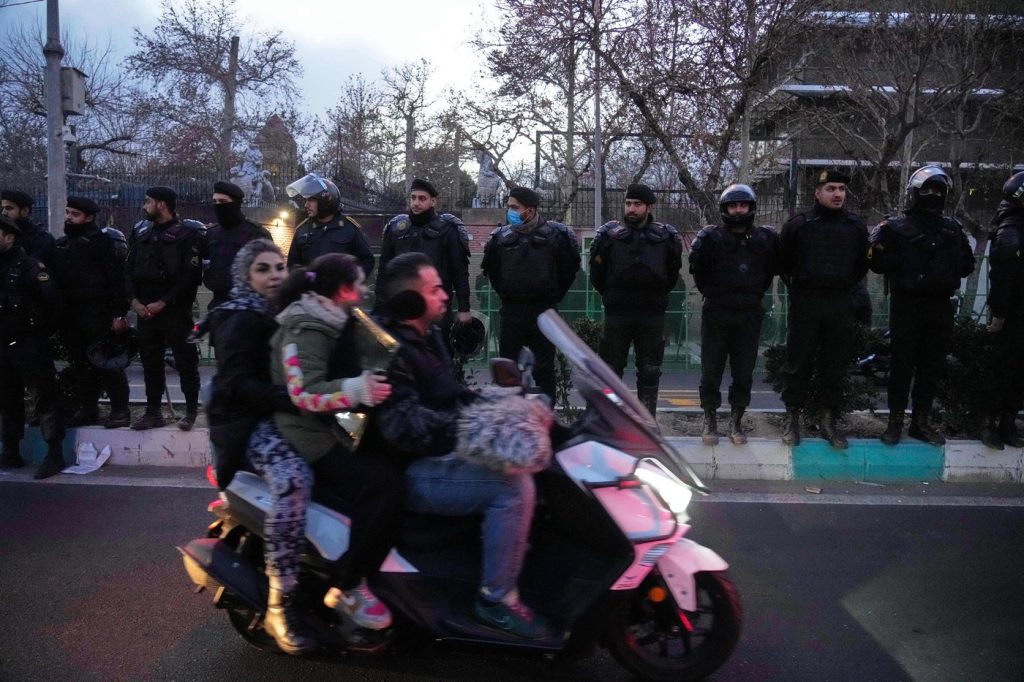
DUBAI, United Arab Emirates (AP) — On Thursday morning, Iran unexpectedly closed its airspace to commercial flights for over four hours, heightening tensions amid ongoing protests and rising hostilities with the United States. The closure occurred without any official explanation, causing international airlines to reroute their flights to avoid Iranian airspace, which is a critical East-West flight corridor.
Despite the closure, several domestic flights resumed around 7 a.m. local time as the restriction seemed to expire after an extension. Prior instances of airspace closure in Iran occurred during military conflicts, such as the 12-day war against Israel in June and skirmishes during the Israel-Hamas war. However, there were currently no indications of active military engagement, leading to speculation about potential security escalations, including the risk of missile launches.
The aviation website SafeAirspace highlighted that numerous airlines have already reduced or suspended their operations in light of the closure. They warned that the situation might reflect an imminent threat of military action, indicating a need for heightened alert among civil aviation operations to prevent possible misidentification of aircraft, recalling the tragic incident in 2020 when Iran's air defense mistakenly shot down Ukraine International Airlines Flight PS752, killing all 176 passengers on board.
This airspace shutdown coincided with advisories for personnel at a significant U.S. military base in Qatar to evacuate, coupled with a temporary halt on travel to military installations in Kuwait. U.S. President Donald Trump delivered ambiguous remarks, stating he had received reports that plans for executions in Iran were halted, although he did not provide specific details. His earlier comments included a promise of support to Iranian protestors, raising questions about the U.S. response to Iran's crackdown on dissent.
Iranian Foreign Minister Abbas Araghchi adopted a calmer tone, urging the U.S. to pursue negotiations instead of escalating tensions. During an interview with Fox News, he conveyed a message to Trump advocating for diplomacy as a preferable approach to war, even while noting the lack of positive past experiences in U.S.-Iran relations.
This shift in rhetoric from both the U.S. and Iran followed remarks by the chief of the Iranian judiciary, emphasizing the urgency to take action against thousands of detainees. Activists have expressed concerns that the Iranian government may soon execute individuals arrested during the protests, which have reportedly resulted in at least 2,615 deaths according to the U.S.-based Human Rights Activists News Agency. This death toll surpasses any previous wave of unrest in Iran, echoing the violence and chaos surrounding the country's 1979 Islamic Revolution.








