

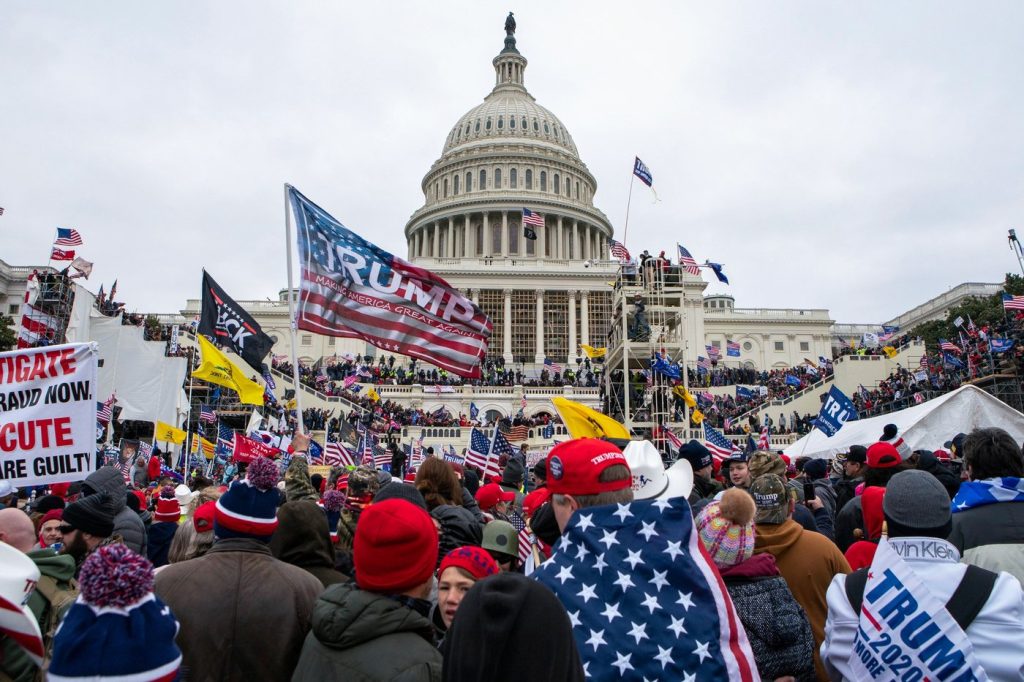
WASHINGTON (AP) — Following the fifth anniversary of the January 6, 2021, Capitol attack, a reassessment of the event is underway, particularly among the ruling party. The House GOP's new Select Committee on the Jan. 6 attack convened for its first hearing to investigate the FBI's lengthy probe into the pipe bombs found outside the Democratic and Republican party headquarters on that day. This investigation continued for years and only recently culminated in the arrest of a suspect.
However, the hearing quickly transformed into a platform for an alternate narrative concerning the events of that day. Prominent figures such as Oath Keepers founder Stewart Rhodes were present, as GOP lawmakers introduced theories suggesting that those involved in the mob violence were misled into storming the Capitol, which was broadcast across the globe.
Rep. Barry Loudermilk of Georgia, who heads the committee, acknowledged the prominence of conspiracy theories during the hearing, asserting that his goal was to uncover the truth. In contrast, Rep. Jamie Raskin of Maryland, the committee's leading Democrat, expressed his determination to oppose any attempts to distort historical facts. He stressed that "the truth is a resilient thing," vowing to counter what he termed "a pack of lies and a bunch of conspiracy theories."
Five years after the insurrection, the lingering impact of January 6 continues to weigh on Congress and the nation, as Americans grapple with the fallout from a day when supporters of former President Donald Trump attempted to disrupt the certification of the 2020 election results, which ultimately favored Democrat Joe Biden. The current GOP-led investigation marks the second attempt by House Republicans to scrutinize the events of January 6, diverging from the original committee set up by former Speaker Nancy Pelosi, which concluded in 2022 that Trump incited the violence as part of his effort to overturn his electoral defeat.
While Trump was impeached for inciting the insurrection, he was later acquitted by the Senate. A four-count indictment against him was subsequently abandoned after he won reelection in 2024, in accordance with Justice Department protocols regarding the prosecution of sitting presidents.
Some GOP members, such as Texas Rep. Troy Nehls, criticized the original January 6 committee as a "total sham," dismissing the testimony of police officers who recounted the violence and chaos they faced that day, labeling their accounts as "highly scripted." The narrative among some Republicans attempted to shift blame, pointing to alleged undercover operatives as instigators and claiming that militias involved in the siege were entrapped by federal agents.
During the hearing, discussions also centered on the FBI's investigation into the pipe bomb incident, with questions raised as to why federal law enforcement took five years to make progress in the case. The recent arrest of Brian Cole Jr. from Virginia, a suspect in placing the bombs, added complexity to discussions. Cole reportedly indicated that he wanted to "speak up" for those who believed the 2020 election was stolen and expressed disappointment in Trump losing to Biden.
Members of the committee, including Rep. Harriet Hageman of Wyoming, criticized the FBI for possibly overlooking crucial leads and alleged that bomb detection methods employed that day were inadequate. John Nantz, a former FBI special agent, suggested that the Bureau was distracted during the critical moments of the Capitol riot.
The conversation around Trump’s pardons of rioters also emerged as a contentious topic. Rep. Raskin highlighted how many individuals convicted for their roles in the insurrection continued to commit crimes post-pardon. Mike Romano, a former Justice Department prosecutor, remarked on the controversial nature of Trump’s pardons, noting that many individuals remained proud of their actions on January 6 and continued to distort the truth surrounding the events.
Furthermore, when pressed about whether Trump’s pardons would apply to Cole if he is convicted in the pipe bomb case, Romano indicated that there is no definitive answer, highlighting ongoing uncertainties regarding the implications of these pardons.








