

CAPE CANAVERAL, Fla. (AP) — An astronaut in poor health made a safe return to Earth alongside three other crew members on Thursday, concluding their space station mission over a month earlier than anticipated. This event marked NASA's first medical evacuation in its history.
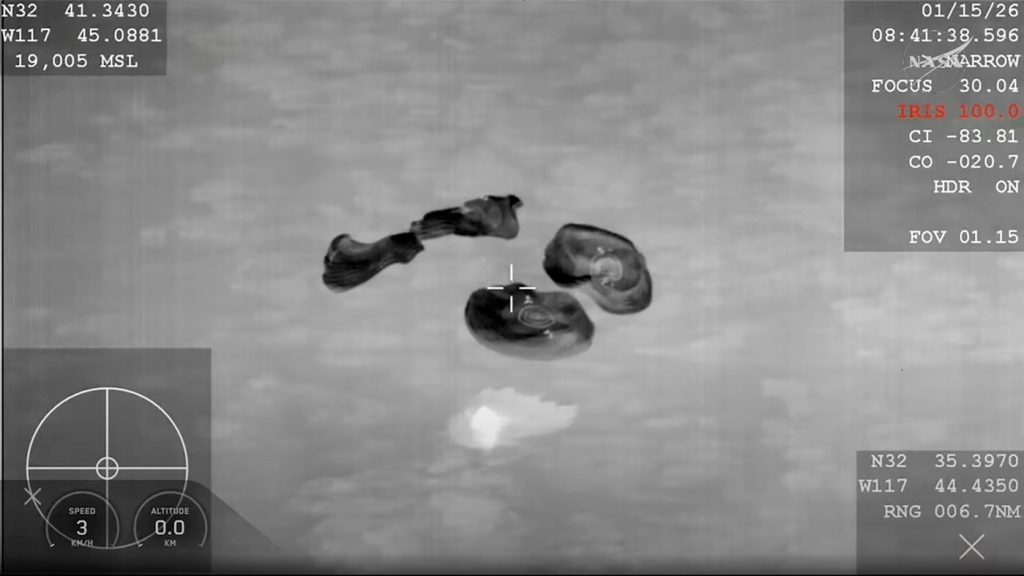
Utilizing SpaceX's technology, the crew capsule executed a targeted nighttime splashdown in the Pacific Ocean near San Diego, occurring less than 11 hours after the astronauts departed from the International Space Station (ISS).
Nasa astronaut Zena Cardman, who served as the capsule commander, expressed her relief, stating, "It’s so good to be home." The mission, which began in August, concluded unexpectedly with only one American and two Russians remaining aboard the ISS following the crew's exit.
Joining Cardman on the return journey were NASA's Mike Fincke, Japan's Kimiya Yui, and Russia's Oleg Platonov. While details about the astronaut who experienced health issues remain undisclosed due to medical privacy laws, it has been confirmed they were stabilized in orbit before the decision was made for an urgent return to Earth for proper medical investigation.
The pre-emptive return of the crew was taken after an astronaut fell sick or sustained an injury on January 7, prompting NASA to cancel a planned spacewalk the following day. This marked the first time in NASA's history that a spaceflight was curtailed for medical reasons, a practice more familiar to the Russian space program from earlier decades.
NASA officials mentioned that the entry and splashdown procedures posed no added risks, and the recovery ship was equipped with the standard array of medical professionals. The exact timeline for the astronauts' flight back to their home base in Houston remains uncertain, as does the return plan for Platonov to Moscow.
Despite the reduced crew size aboard the ISS, NASA reassured that operations could continue with three astronauts, even managing with as few as two if necessary. However, it was emphasized that no spacewalks, not even for emergencies, would be performed until the arrival of the next crew. This upcoming team is expected to include two Americans, a French astronaut, and another Russian.
The mission highlights the ongoing complexities of space travel and human health management in low Earth orbit. As future launches are planned, NASA and SpaceX are working to expedite the deployment of a new crew, currently scheduled for mid-February.
Marcia Dunn, The Associated Press








