

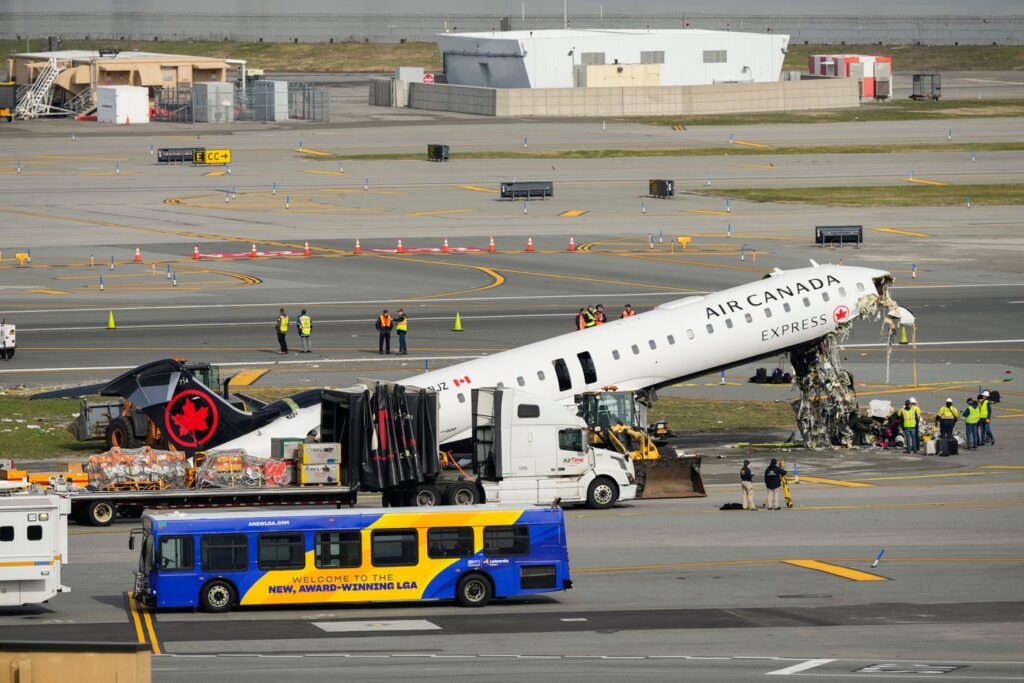
MONTREAL – In the wake of the tragic Air Canada Express plane crash at LaGuardia Airport, experts are assessing the incident and expressing surprise that the outcome was not more devastating, despite the tragic loss of two pilots. The unexpected resilience of the aircraft has sparked discussions among aviation professionals regarding the structural integrity of commercial planes in extreme circumstances.
Retired Air Canada pilot Benoit Gauthier explains that commercial airplanes are engineered primarily for flight, not for withstanding the impact of head-on collisions with heavy objects, such as fire trucks that can weigh between 25 and 50 tonnes. Gauthier points out the design features that allow for some structural resilience, including the fuselage's ability to absorb certain types of impacts. The landing gear and subflooring are specifically designed with shock absorption in mind to protect the aircraft during emergency landings, thus providing some degree of safety in hazardous scenarios.
However, the materials used in commercial aircraft construction, including aluminum alloy and carbon fiber, prioritize lightness over energy absorption, particularly in the nose area of the aircraft. This structural attribute raises concerns about the ability of the plane to withstand serious collisions. Aviation expert John Gradek highlighted the remarkable turn of events wherein all passengers and cabin crew members survived the crash. He attributed this fortunate outcome to two key factors: the pilots' quick braking response just before the collision and the way the front of the plane jostled upward at the moment of impact. This upward motion helped dissipate some of the kinetic energy that would have otherwise transmitted violently throughout the aircraft.
The incident occurred late Sunday night when an air traffic controller mistakenly cleared Air Canada Express Flight 8646 for landing less than two minutes before allowing a Port Authority fire truck to cross the active runway. This oversight resulted in a tragic collision, leading to the death of two Canadian pilots and sending more than 40 individuals to hospitals for treatment of various injuries.
The situation is currently under investigation, and it has raised significant questions about air traffic control protocols and runway safety measures at LaGuardia Airport. The findings from these investigations will be crucial in preventing similar accidents in the future and in improving the operational standards at airports.
This report initially surfaced on March 25, 2026, highlighting the ongoing implications of such incidents on aviation safety and the constant need for critical evaluations of safety procedures within the industry. The tragic loss of life, paired with the survival of many others, underscores the complex nature of aviation safety and the design limitations of commercial aircraft. The investigations and analyses that follow will be essential in shaping future regulations and practices aimed at ensuring the safety of passengers and crew in the skies.
Companies involved in this story include Air Canada (TSX:AC), indicating the broader commercial implications of such an aviation incident. The ongoing scrutiny and expert analyses reflect a commitment to understanding and improving upon the factors that contribute to safety in air travel.








